
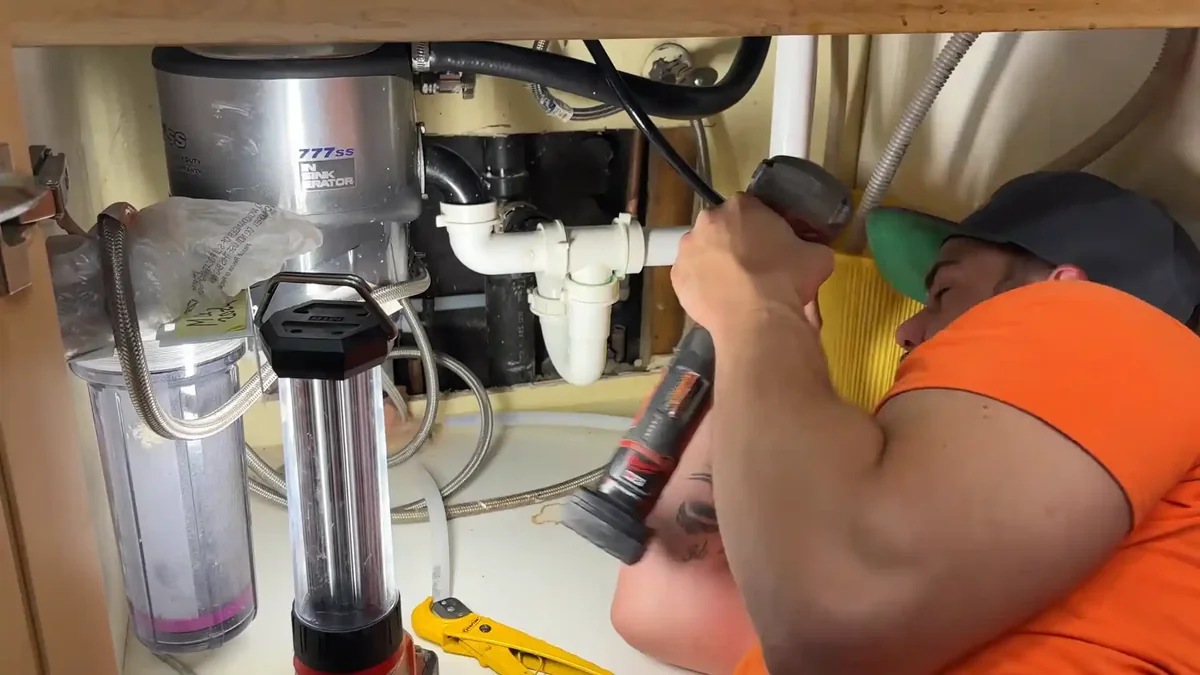
Find and Close the Main Shutoff First
The most important action in the first sixty seconds is finding the main water shutoff and closing it. In Boulder homes, the main shutoff is usually located near the water heater in a utility closet, in the mechanical room, or in a crawl space access panel. In some older homes it is on the wall of the basement or in the garage. A small number of homes have only an exterior shutoff at the meter box. If you have not located yours before an emergency, take five minutes this week to find it and confirm it works.
The shutoff is typically a gate valve (round handle that takes multiple turns to close) or a ball valve (lever handle that closes with a quarter turn). If the valve has not been operated in years, it may be stiff. Apply steady pressure rather than forcing it. Closing the main shutoff stops all water flow into the home and limits the damage to what is already in the pipes.
If you cannot find or operate the interior shutoff, check the meter box at the street. There is a shutoff on the customer side of the meter that takes a meter key, available at any hardware store. This shuts off the entire home's water supply at the property line.
Relieve Line Pressure and Drain the Pipes
After closing the main shutoff, open a cold-water faucet on the lowest floor of the house. This releases residual pressure in the supply lines and lets the water that is still in the pipes drain down and out through that faucet rather than continuing to push through the burst point. Open one or two faucets; you do not need to open every fixture in the house.
Turn off the water heater. This step protects the tank. A water heater that runs out of cold-water supply and continues to heat will cycle the heating element against an empty or low tank. Electric water heaters should have the breaker switched off. Gas water heaters should be set to pilot mode. This step can wait until the shutoff is complete and you have a moment to get to the panel.
Limit the Water Already in the Walls
The burst point released water into whatever space surrounds the pipe, whether that is a wall cavity, a floor assembly, or a ceiling. That water continues moving after the main is closed, draining through framing and into lower spaces. A few actions in the first few minutes can reduce the total area it reaches.
If you can see water coming from a ceiling, place buckets under the active drip points and move valuables and furniture out of the affected area. If you can access the floor or wall cavity from an adjacent room without creating damage, a small opening that lets water drain down and out can prevent it from spreading sideways. Do not open walls unless it is obvious the water is spreading and the opening will help it drain rather than spread further.
Take photos and short videos of all visible damage before any cleanup begins. Date-stamped documentation of the damage is what your insurance adjuster will ask for first.
| Step | Action | Why |
|---|---|---|
| 1 (first 60 sec) | Close main shutoff | Stops active water flow immediately |
| 2 (next 2 min) | Open a low-floor faucet | Relieves line pressure; drains residual water |
| 3 (next 5 min) | Switch off water heater | Protects tank from dry-run damage |
| 4 (next 5 min) | Document with photos | Insurance claim requires visual evidence |
| 5 (next 5 min) | Move valuables, place buckets | Limits secondary damage from residual water |
| 6 (within 30 min) | Call for repair crew | Gets detection and repair scheduled immediately |
The Colorado Winter Scenario
Many Boulder burst pipe events follow a specific pattern. A hose was left attached to an outdoor bib going into winter. The pipe split during a hard freeze in December or January. The crack was held closed by the ice inside the pipe and by the hose attachment. Then a Chinook thaw came through, warming temperatures rapidly over twenty-four to forty-eight hours. The ice melted, the pressure returned, and the split became an active leak, often inside the wall behind the bib.
These events frequently happen while the homeowner is away or asleep, and the water runs until someone notices a wet ceiling or wall. In these cases, detection is not about finding the split, which is usually at the bib. It is about tracing how far the water ran inside the wall cavity and checking for other damage. That check prevents a returned homeowner from finding mold six weeks later because the water was not fully traced at the time of repair.
After the Emergency: Detection Before Drywall
Once the water is off and the immediate situation is stable, the next step is a professional assessment before any drywall or flooring restoration begins. Water inside a wall or floor assembly travels well beyond the visible damage, and restoration that covers undetected moisture leads to mold that surfaces weeks later. A thermal scan and moisture mapping of the affected area tells you the true extent of the water travel so the remediation team knows exactly what to dry out.
We respond to pipe bursts in Table Mesa, across south and east Boulder, and the rest of the county. A call to (303) 552-3896 at any hour gets a crew moving toward your address. We confirm the shutoff is fully closed, find the burst point, then map how far the water traveled before any drywall is touched.
Frequently Asked Questions
- My pipes burst and there is water in my walls. Should I open the drywall right now?
- Only if the opening will help the water drain rather than spread. A small opening at a low point, like near the floor, that lets water run down and out can reduce damage. Random openings higher on the wall may not help and add restoration work. Once the main is off and photos are taken, the better approach is to get a moisture assessment done before cutting extensively. The assessment shows exactly where the water went, which means targeted drywall removal rather than guessing.
- How do I know if the burst was from a frozen pipe or something else?
- Colorado winter burst pipes usually involve a specific scenario: a hose left attached to a bib, a pipe in an unheated exterior wall, or a crawl space line that lost its heat tape. The split is usually a clean longitudinal crack in the pipe, not a corroded hole. If the pipe looks split rather than pitted, and the event followed a freeze-thaw cycle, the cause is almost certainly freeze expansion. A freeze cause matters for insurance documentation.
- Does my homeowners insurance cover a burst pipe?
- Most standard policies cover sudden and accidental water damage from a burst pipe, including drywall, flooring, and contents. They typically do not cover the pipe repair itself. Gradual leaks, long-term seepage, and negligence (like a known uninsulated pipe in a freezing space) may be excluded. Document everything before cleanup, and report the claim on the same day if possible. Call (303) 552-3896 for the damage assessment report your adjuster will need.
Suspect a hidden leak? Get it found without demolition.
✆ Call (303) 552-3896, 24 Hours