
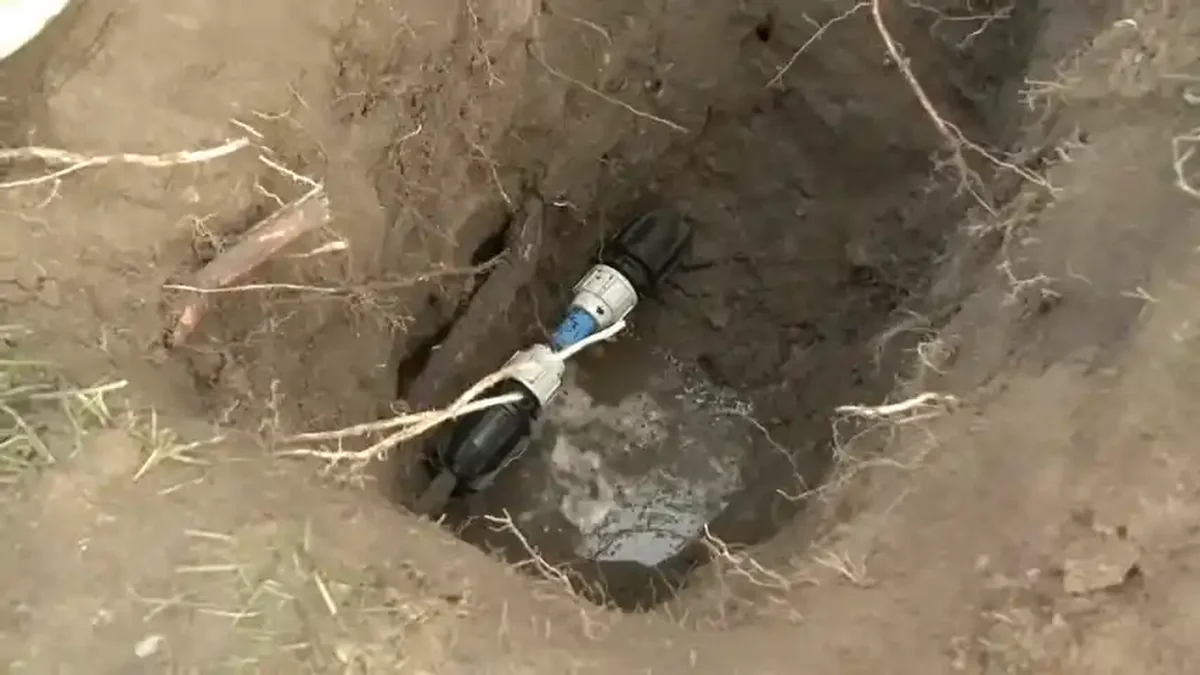
The Line Nobody Thinks About
The service line runs from the city water meter at the street to where water enters the foundation of your house. It carries pressurized water around the clock. It runs through soil, under driveways, and across lawns. And it is almost never inspected. Most homeowners have never seen it, do not know what material it is made of, and have no idea how old it is.
In Boulder, the homeowner owns and is responsible for this line from the meter to the house. A city main breaks and the city fixes it. Your service line breaks and you pay for it. With many Boulder service lines forty to eighty years old and sitting in active clay, knowing the early signs of failure is worthwhile. The lawn and pavement are the last to tell you.
Why Boulder Clay Hides the Leak
The Pierre Shale clay under Boulder absorbs water readily. When a service line develops a small crack or a failed joint, the escaping water enters the surrounding clay rather than rising to the surface. The clay holds it, and the wet zone expands outward from the break point as the leak continues. The water may travel through the clay for several feet before finding a path upward, such as a crack in pavement, the edge of a driveway, or a low spot in the lawn.
This means a service line can lose water for days or weeks before any surface evidence appears. During that window, the meter is the only device that can detect the loss. The clay is too good at containing the water, and the homeowner has no other signal until the ground eventually saturates and the evidence finds a way up.
Early Signs at the Meter
The sequence for detecting a buried service line leak begins exactly the same way as any other hidden leak check. Shut every fixture and appliance inside the house. Then close the irrigation shutoff. Watch the meter indicator. If the indicator is moving with all of those shutoffs confirmed, and the leak is not inside the house, the service line is the primary suspect.
To confirm that the loss is in the service line rather than inside the house, close the main house shutoff and recheck the indicator. If the meter keeps moving after the house main is closed, the loss is between the meter and that shutoff, which means the service line itself. At that point, the search zone is defined: the pipe running under your front yard from the street to the house.
Early Warning Signs Before the Lawn Responds
Between the meter-movement signal and visible lawn damage, several other signals can appear. Water pressure that drops across every fixture in the house at the same time, with no change in the street pressure, points to a loss in the supply line feeding the home. The service line is narrowing or losing volume, and less pressure arrives at the meter entry point than the street supply is providing.
A persistent soft spot or spongy ground in the front yard, in an area that stays wet well after rain has dried elsewhere, can be the clay finally saturating to the point of seepage. An unusually green or lush patch of grass in the lawn, especially in summer when the rest of the lawn is under watering restrictions, sometimes marks a buried water source feeding the roots from below. Sinkholes and pavement lifting are late signs that appear after the loss has been running long enough to saturate and erode the soil beneath the hardscape.
| Stage | What You See or Measure | Implication |
|---|---|---|
| Early (days to weeks) | Meter moves after house main closes | Service line confirmed losing water |
| Early | Pressure drop at all fixtures simultaneously | Volume lost before reaching house |
| Mid (weeks to months) | Unusual green patch or soft ground in yard | Water saturating clay, beginning to surface |
| Mid | Higher water bill, no visible source indoors | Continuous outdoor loss building up |
| Late | Visible wet ground, sinkholes, pavement cracks | Loss has been running long enough to erode soil |
| Late | Rust or brown water on first morning draw | Older galvanized line failing from inside |
How Electronic Detection Locates the Break
Once the meter confirms a service line loss, finding where along the run the failure is located requires electronic methods. A crew member traces the line from the meter to the house with an electronic locator. Then acoustic sensors or a tracer gas system locates the failure point within the traced run.
Acoustic sensors listen along the surface above the pipe path while the pipe is pressurized. The leak transmits sound upward through the soil, and the sensor picks up the point of maximum signal. For deeper lines or where clay absorbs the sound, tracer gas gives a precise result. Gas injected into the drained pipe escapes at the break, rises to the surface, and a sensor finds it within a few inches of the failure. That precision means one excavation, one repair, and one backfill rather than a trench across the yard.
In Niwot and other large-lot communities, service lines can be thirty to fifty feet long or more. The detection sequence is the same, but the line-tracing step takes longer and the search area is larger. Electronic methods are especially valuable on large properties precisely because guessing on a long buried run is expensive in both excavation and restoration cost. Call (303) 552-3896 to schedule a service line evaluation, and bring the meter reading you have already taken.
Frequently Asked Questions
- Who is responsible for the service line if it breaks: me or the city?
- In Boulder, you are responsible for the service line from the city meter to your house. The city owns the meter and everything on the street side. The full run from the meter to your main shutoff is on the homeowner. This includes dig costs, pipe replacement, and any street or sidewalk restoration required. Some older neighborhoods have shared or unclear service line configurations; Boulder's utility department at 303-441-3260 can confirm the ownership line for your address.
- My neighbor had their service line replaced. How do I know if mine is due?
- Age and material are the main factors. An original galvanized line in a pre-1960 Boulder home is at or past its expected service life. A copper service line from the 1960s or 1970s has been in soft water for sixty years and may be approaching similar territory. If your neighbor's line failed and yours is the same age and material, a meter-test check and a professional assessment of the line condition are worthwhile. One meter reading costs nothing.
- Can you replace a service line without tearing up my whole yard?
- Often yes. Directional boring or pipe-bursting techniques can replace a service line with minimal surface disturbance. The old pipe is burst outward while a new one is pulled through, requiring only small entry and exit pits rather than a continuous trench. Not every site is suitable for these methods, but when they apply they reduce yard restoration significantly. Ask about trenchless options when you call: (303) 552-3896.
Suspect a hidden leak? Get it found without demolition.
✆ Call (303) 552-3896, 24 Hours