
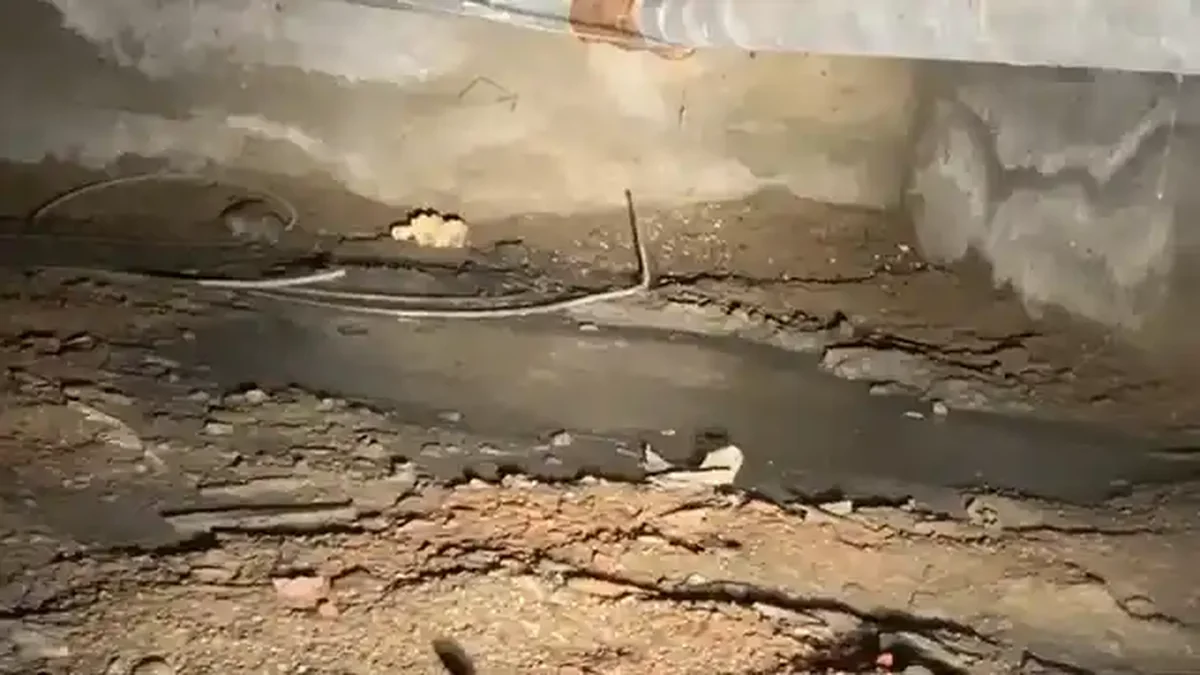
Why Boulder Crawl Spaces Get Wet
Boulder's older housing stock, especially the pre-war and early post-war homes in neighborhoods like Mapleton Hill, Hill, and University Hill, runs on crawl-space foundations rather than full basements. These spaces sit close to grade, often without vapor barriers, and they collect moisture from whatever source is active. In Boulder, two sources dominate.
The first is plumbing. Crawl spaces hold supply lines, drain pipes, and the bottom runs of interior plumbing. Any of those can leak, and the water runs down and pools in the low spots of the crawl. The second is groundwater, either from rain and snowmelt percolating through the soil or from the water table rising seasonally near creek corridors. Boulder Creek, Fourmile Creek, and their tributaries raise local groundwater during spring runoff years and heavy rain seasons.
The distinction matters more than it might seem. A plumbing leak calls for a plumber. Groundwater calls for a waterproofer, a drainage contractor, or simply better grading around the foundation. Treating groundwater as a plumbing problem or vice versa wastes money and leaves the real issue unaddressed. The goal is to name the source correctly before anyone spends anything on a fix.
Signs That Point to a Plumbing Leak
Plumbing leaks have specific behaviors. The moisture appears even during dry periods when the soil around the house is not saturated. It often concentrates in one area rather than spreading evenly across the crawl. You may see water stains or drip marks on the subfloor joists directly above the wet zone. If a drain line is the source, the moisture tends to appear when water is actively used in the house and dry up partly during long periods without use.
The clearest test is the water meter. With all fixtures off and the house quiet, a spinning meter indicator means pressurized water is leaving the system somewhere. Close the main shutoff and recheck the crawl an hour later. If the dripping or pooling has slowed or stopped, the source is plumbing. A supply leak can often be confirmed this way without any tools beyond a flashlight.
Drain leaks behave differently. They only flow when water runs through the house, so the wet spot in the crawl appears during active use periods, after showers, dishwasher cycles, or laundry, and is drier when the house is vacant. A camera inspection of the drain line can confirm a crack or failed joint without opening the floor above.
Signs That Point to Groundwater
Groundwater behaves on a different schedule than plumbing. It increases during spring snowmelt, after heavy rains, and during years of above-average precipitation. It tends to enter through the foundation walls, through cracks in the footer, or through the soil at the edge of the crawl rather than from above. The moisture is diffuse rather than concentrated at one spot. There is no correlation with whether anyone is using water in the house, and closing the main shutoff has no effect on the seepage rate.
Boulder's expansive clay soils hold and direct moisture in ways that simple grading does not always manage. A bowl-shaped lot that drains toward the foundation during runoff will saturate the soil against the crawl walls and push moisture inward. The same clay that stresses buried pipes can also trap water against a foundation for weeks after a rain event.
| Indicator | Plumbing Leak | Groundwater |
|---|---|---|
| Season of wetness | Consistent year-round | Spring or after heavy rain |
| Location in crawl | Concentrated below a pipe | Diffuse, especially along walls |
| Meter test response | Meter moves with all fixtures off | Meter still with all fixtures off |
| Shutoff test | Dripping slows when main is closed | No change when main is closed |
| Dry-weather test | Still wet in July drought | Often dries out in summer |
| Correct fix | Plumbing repair | Drainage, grading, or waterproofing |
What Non-Invasive Detection Adds
When the shutoff test and visual inspection leave the answer unclear, thermal imaging and moisture mapping resolve it cleanly. A thermal camera reads temperature differences across the subfloor and joists, and a plumbing leak shows up as a distinct cold or warm spot originating from the pipe above. Groundwater shows up as a broad, diffuse cool band along the foundation walls, not associated with any pipe path.
This distinction is worth a professional visit. Going straight to remediation without confirming the source is one of the more costly mistakes in home repair. A drainage system installed against groundwater does nothing to stop a leaking supply pipe. A plumbing repair does nothing to stop spring runoff pushing through the foundation. The diagnostic visit pays for itself every time it prevents the wrong fix.
Our crawl space leak detection service uses thermal and moisture mapping to name the source before recommending any repair. We also work with the non-invasive tools that find supply leaks through intact floors, so the crawl does not need to be fully excavated to confirm a plumbing failure. For a wet crawl in any Boulder neighborhood, call (303) 552-3896 and we will start by identifying the source.
Frequently Asked Questions
- My crawl space is only wet in spring. Is that groundwater or can it still be plumbing?
- Spring is peak season for both. Snowmelt saturates the soil around Boulder foundations and raises groundwater near creek corridors, producing seasonal groundwater seepage. But supply lines under a crawl also face seasonal stress as ground movement peaks with the wet-dry cycle. Run the meter test during the wet period: if the meter spins with all fixtures off, plumbing is contributing regardless of the season.
- Is there mold risk if I leave a wet crawl space alone?
- Yes. Persistent moisture in an enclosed crawl space creates the conditions mold needs to grow on wood framing, insulation, and subfloor materials. Both plumbing leaks and groundwater can drive mold if allowed to continue. Finding and fixing the source is a prerequisite to any remediation; treating the mold without addressing the moisture usually means the mold returns.
- Can you detect a crawl space supply leak without tearing up my floor?
- Yes. Acoustic listening through the subfloor, thermal imaging from inside the crawl, and tracer gas can locate a pressurized leak in or near a crawl space without opening the floor above. One access point, sized for the actual repair, is all that should be needed once the leak is located. Call (303) 552-3896 for a non-invasive diagnostic first.
Suspect a hidden leak? Get it found without demolition.
✆ Call (303) 552-3896, 24 Hours